18 April 2024
Is there a link between soil health and soil carbon capture?

Verdant Carbon is a soil sampling and analysis company. They provide farmers and growers with data on carbon measurements in their soils. In 2023, we awarded Verdant Carbon a Business Innovation Voucher to work with scientists at NIAB. Their research project is exploring the link between the amount and diversity of microbiome in soils with how much carbon the soils can store.
We spoke to owners, Frank and David Gollins, to find out more about their organisation and why they decided to apply for a Growing Kent and Medway voucher worth £14,899.
Tell us about your company
"Verdant Carbon provides sampling and analysis of soil carbon and soil health to farmers. It was established in response to the rising demand for accurate carbon measurements and standardisation in agricultural practice.
Farmers are under increasing government pressure to address climate change. We provide farmers with accurate and reliable measurements of soil carbon as a tool that is necessary to understand how their soil management practices impact soil health and soil carbon capture. This will help farmers to improve their environmental impact more effectively."
How does your service benefit the horticulture and agriculture industry?
"Soils have significant potential to sequester atmospheric carbon depending on how the soil is managed. Only through reliable measurement systems can we hope to understand what optimum soil management should look like on each farm. The pace of capturing soil carbon may be gradual, but the changes to soil carbon can be measured in an affordable, standardised, and rapid way.
Repeated soil carbon and health assessments (carbon baselining) can quickly reveal how small changes to soil management translate to carbon capture capacity. This is valuable information for any farm as it establishes a record of carbon sequestration to support the development of best agronomic practices on farms.
Standardising a method for measuring carbon capture by soils will enable better comparison of farming practices and promote widespread adoption across the industry. Providing greater knowledge of the soil microbiome (the microbiological activity within the soil) will enable farmers to better understand and plan soil management practices. Together, carbon and microbiome assessments provide a robust tool which can support and encourage farmers in their climate transition."
How are you working with NIAB?
"We were awarded a Business Innovation Voucher from Growing Kent & Medway, which funded 75% of our project with NIAB. Our project aims to understand the relationship between the soil microbiome and soil carbon. As a company, we are particularly interested in organic carbon which is most affected by farming practices and consists of a variety of nematodes, protozoa, bacteria, fungi and more.
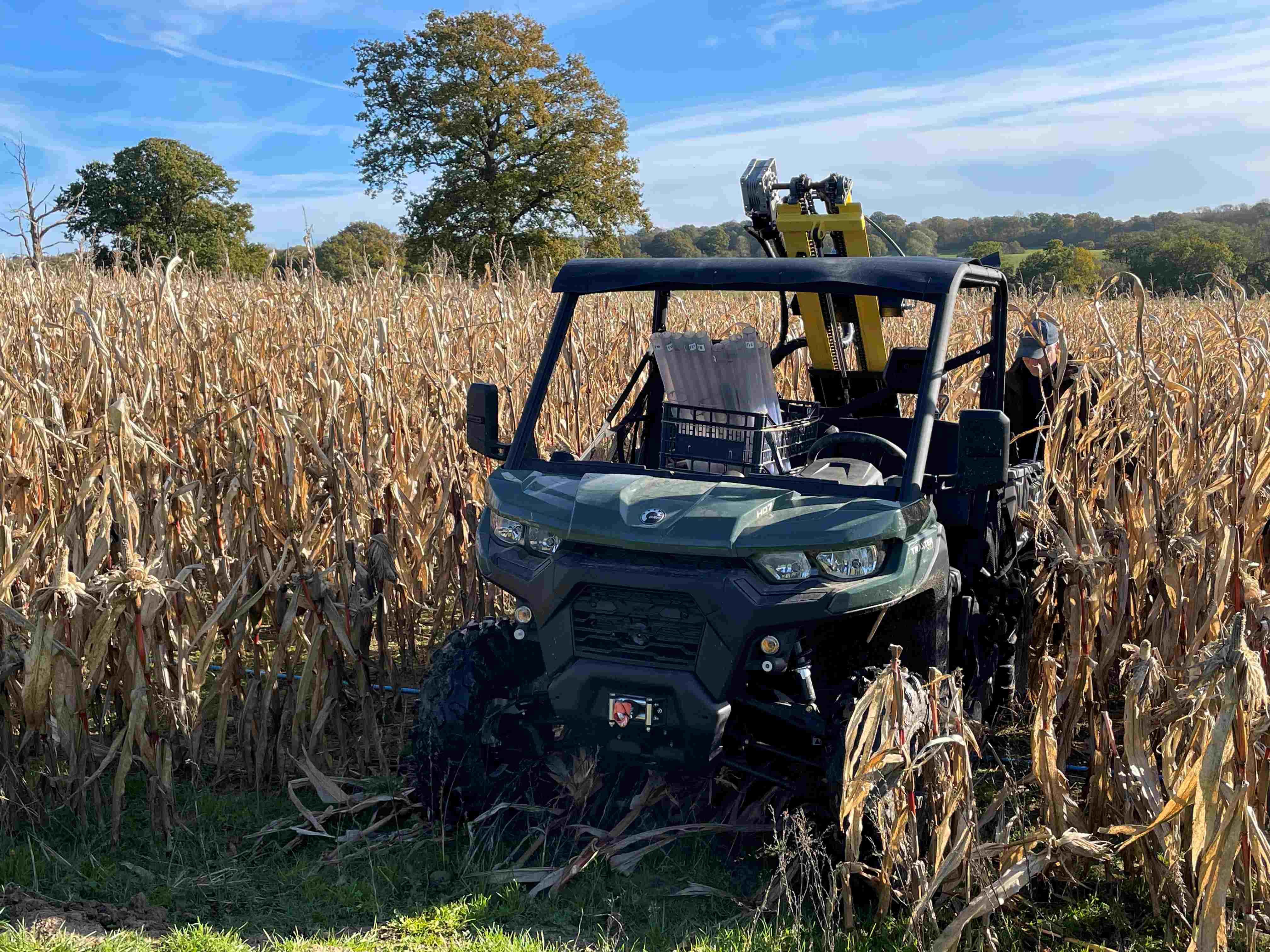
We sample and geotag soils on farms down to one metre depth (subject to soil conditions). The metre is divided into three different sections, allowing for a detailed assessment. These samples are then analysed for total, organic, and inorganic carbon using a technique known as Dumas Dry Combustion.
NIAB is taking a proportion of the samples and analysing bacterial and fungal microbial diversity using a hi-tech DNA sequencing approach. The aim of this is to find patterns between soil carbon content and the microbiome which will allow farmers to enhance levels of carbon sequestration through improving their soil microbiome and facilitate their journey towards achieving net-zero emissions."
Why did you join Growing Kent & Medway?
"Partnering with Growing Kent & Medway has allowed our fledgling company to expand its connections with researchers, such as those at NIAB. The research at NIAB encompasses a diverse range of cropping systems, including commercial orchards, arable regions and forestry areas. The extensive dataset derived from this research will hold great value for the improvement of soil management practices.
Despite soils being vitally important on several levels, their biological complexity remains poorly understood. Our Growing Kent & Medway funded work aims to bridge the knowledge gap providing farmers with a greater understanding of enhancing carbon sequestration."
This article first appeared in NIAB's Landmark Magazine, Issue 54 - Winter 2023/2024
Find out more about Growing Kent & Medway's grant programmes and funding opportunities
See it Differently
Related Links
Gallery
Related Articles
Continue your exploration of this topic with these related news articles.

How Growing Green Helps Growers Thrive
Robert Mitchell Farms, located near Sevenoaks, is a specialist producer of Bramley apples supplying supermarkets and the processed food industry. In 2022, they applied for a sustainability grant from Growing Green to replace an old...
Agri-Tech & Horticulture
7 min read

Below-ground listening devices monitor biodiversity in vineyard trials
A new research project funded by Growing Kent & Medway to increase carbon and increase biodiversity in UK vineyards will use cutting-edge technology to monitor the impact of its trials. Led by Niab, the research project will see...
Agri-Tech & Horticulture
4 min read

Turning dust into gold: finding value in cherry and seaweed waste
Innovative products made from agricultural waste materials are being tested for their benefits to human and crop health, in new research projects we are funding. Scientists at the University of Kent are working with companies to...
Agri-Tech & Horticulture
3 min read